Close
Type at least 1 character to search
Back to top

— Artist Process

Original Art on Paper:
A Different Side of Roche Jackson

“My mixed media practice extends beyond canvas. Working on 300 GSM watercolor paper, I create original works that combine graffiti, layered imagery, and carefully preserved raw-paper details. Each piece is embossed with my Roche1300 logo, signed, and numbered.”

— Artist Process

A Different Surface, A Different Experience

My work has always been driven by the relationship between imagery, layering, and the surface beneath it. While canvas allows me to build up paint and collage into a physical, textured composition, working on paper introduces a different set of possibilities.

These original works are created on 300 GSM watercolor paper. The substantial paper surface gives each piece a character distinct from canvas, allowing the imagery and the exposed areas around it to work together as part of the composition.

Rather than treating paper as a background that disappears beneath the image, I want it to remain visible and active. The raw areas, the edges, and the contrast between printed imagery and untouched paper all contribute to the finished work.

My approach still draws from graffiti and collage, but the smaller format encourages a different kind of restraint. Not every area needs another layer. Sometimes the strongest decision is knowing what to leave alone.

The Importance of What Remains Untouched

One of the defining elements of these original works on paper is the use of masking to preserve areas of the raw paper. Rather than covering the entire surface, I deliberately leave portions exposed, allowing the natural paper to become part of the composition.

These uncovered areas create contrast and give the imagery room to breathe. They establish boundaries between the marks I make and the material beneath them, creating a balance between what is added and what is left alone.

This idea connects directly to my broader mixed media practice. Graffiti, collage, and paint can overlap, interrupt, and transform existing imagery. Each new layer changes what came before it. But the process isn’t simply about adding more. It’s about recognizing which elements need to remain visible and which areas benefit from restraint.

On paper, that relationship becomes especially apparent. The exposed surface acts as a visual pause, giving the eye a place to rest within the composition. The edges become deliberate, and the paper itself becomes an active part of the finished work rather than something hidden beneath it.

For me, knowing what not to cover is just as important as deciding what to add. The final image depends on both decisions.

The Finishing Details: Embossing, Signature, and Numbering

The details that finish a work are just as important as the decisions that shape the image. With my original works on paper, I want the final presentation to feel deliberate, from the exposed paper to the marks that identify the piece as my own.

Each work is embossed with my Roche Jackson logo, creating a physical impression in the 300 GSM watercolor paper. Unlike a printed mark, the embossing introduces a subtle change in the surface itself. It is a small detail, but one that rewards a closer look.

I also sign and number each original individually. These marks establish authorship and identify the individual work, completing the presentation without distracting from the composition.

There is a connection here to graffiti, where a personal mark carries a strong sense of identity. My approach to the Roche1300 logo brings that idea into the studio, translating the artist’s mark into a more restrained, tactile detail.

For me, these finishing touches aren’t decoration added simply to make the work feel complete. They are part of how I present each piece as an original artwork, with its own composition, material character, and connection to my practice.

Original Art on Paper and the Experience of Collecting

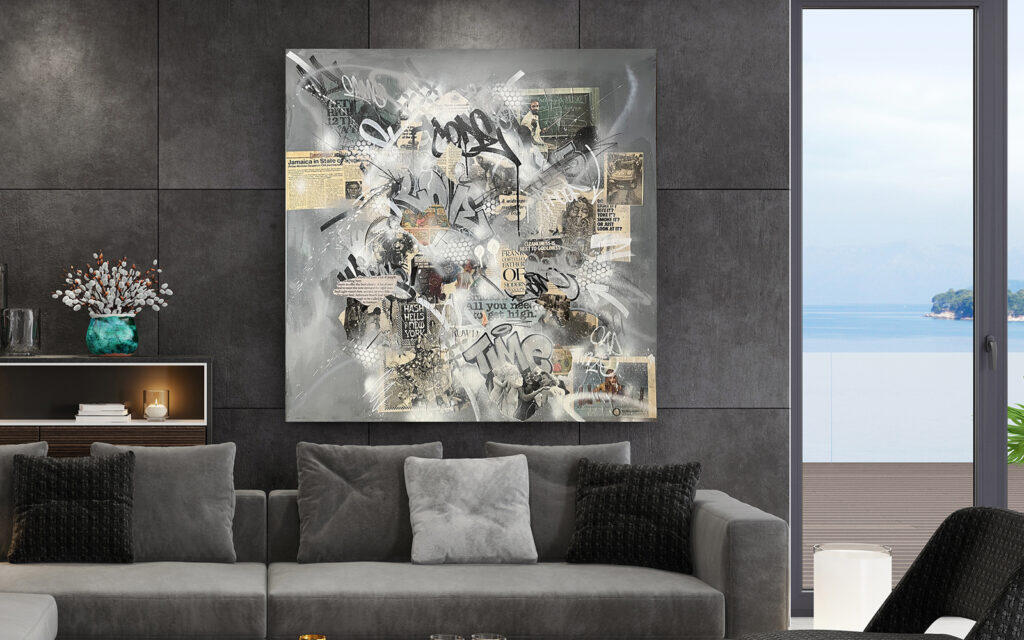
Scale changes the way we experience art. A large canvas can command a room, becoming part of the architecture around it. Smaller works invite a different kind of attention, bringing the viewer closer to the imagery, the exposed paper, and the details that might otherwise be overlooked.

My original works on paper offer another way to experience my mixed media practice. Created on 300 GSM watercolor paper, each piece has its own composition and material character. The masking, embossed logo, signature, and numbering contribute to the finished work without taking attention away from the image itself.

The paper format also creates practical possibilities for collecting and displaying the work. Each piece can be framed to suit its surroundings, displayed individually, or brought together with other works to create a more personal collection. The artwork can also be shipped flat, making transportation more straightforward than with a stretched canvas.

But convenience isn’t the reason I make these pieces. Their value begins with the artwork itself: the composition, the decisions behind the layers, and the relationship between the image and the untouched surface. The smaller format offers a different experience, not a lesser one.

I want each work to stand on its own while remaining connected to the broader body of work. Whether viewed individually or alongside a larger painting, these original works on paper offer another way to engage with the visual language that defines Roche Jackson.

The Same Visual Language, Without Repeating the Same Process

Experimentation has always been an important part of my practice. I move between materials because each one creates different possibilities. Canvas, paper, collage, paint, and graffiti all have their own physical characteristics, and those characteristics influence the decisions I make.

My larger mixed media canvases allow me to build up a physical surface through layers of imagery and paint. Working on 300 GSM watercolor paper gives me another way to approach those same visual ideas, with greater attention to the relationship between the image, the edges, and the areas I choose to leave untouched.

I don’t want to become locked into a single format simply because it is the one people recognize. Each material should bring something to the work rather than serve as a substitute for another. The point isn’t to recreate a canvas on paper. It’s to discover what becomes possible when the material changes.

The underlying intention remains connected across both formats. Graffiti, layered imagery, and deliberate marks create a visual language that continues to evolve, while the surface determines how those elements come together.

These original works on paper are part of that ongoing exploration. They allow me to work with a different scale and a different set of constraints while remaining true to the ideas that drive my practice.

For me, experimentation isn’t about changing materials for the sake of change. It’s about finding new ways to develop an idea without repeating the same solution.

A Different Surface, The Same Intention

Moving between canvas and paper allows me to approach familiar ideas from different directions. Each material brings its own limitations and possibilities, and those differences influence the way I build an image.

These original works on paper bring together the elements that continue to drive my practice: graffiti, layered imagery, deliberate marks, and the balance between what is added and what remains exposed. The 300 GSM watercolor paper, masked details, embossed Roche1300 logo, signature, and numbering all contribute to the finished work.

They may be smaller than my canvases, but their purpose is not to imitate them. They offer another expression of the same visual language, with their own material character and presence.

For me, the work is always about finding the right balance between the image, the surface, and the decisions that bring everything together. That exploration continues with every piece.

— THE ARTWORK

Memory, material, and the marks we leave behind.

Discover Roche Jackson’s mixed media graffiti paintings, combining vintage collage, spray paint, and layered imagery.

Explore the mixed media collection →