What We Cover Up Can Be as Important as What We Preserve
There is a tendency to think of memory in terms of what we keep.
Photographs are saved. Objects become sentimental. Certain stories are repeated until they become part of our personal histories.
But forgetting, concealment, and revision are equally important parts of how we experience the past.
We do not remember everything. We change the way we describe our experiences. Sometimes we protect ourselves from certain memories. Sometimes we discover that a story we have told for years is more complicated than we once believed.
Covering something does not always mean rejecting it. It might mean that our attention has moved elsewhere. It might mean we are seeing it differently. Or it might mean that something new has become more important.
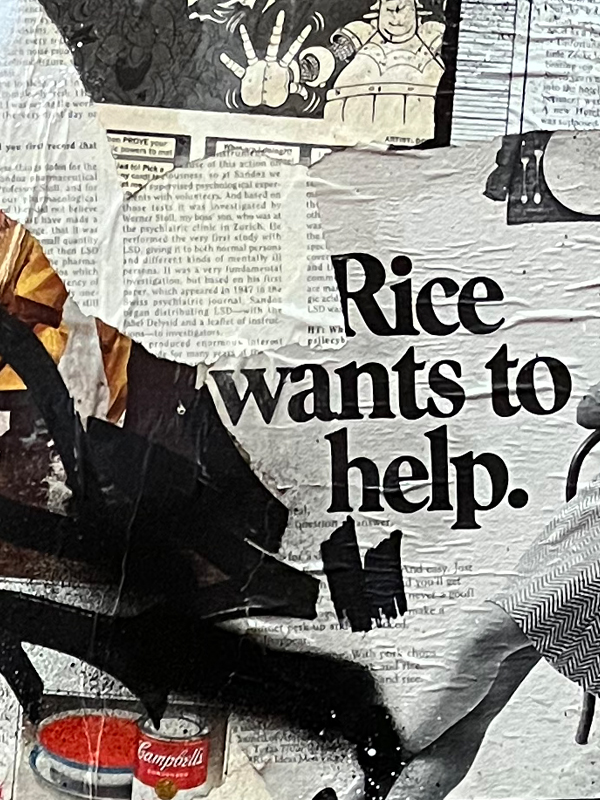
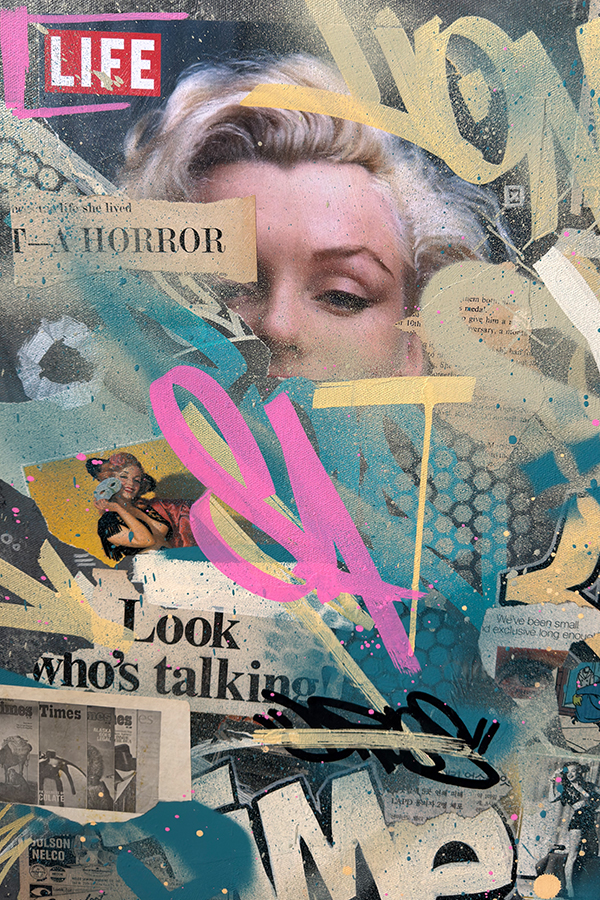
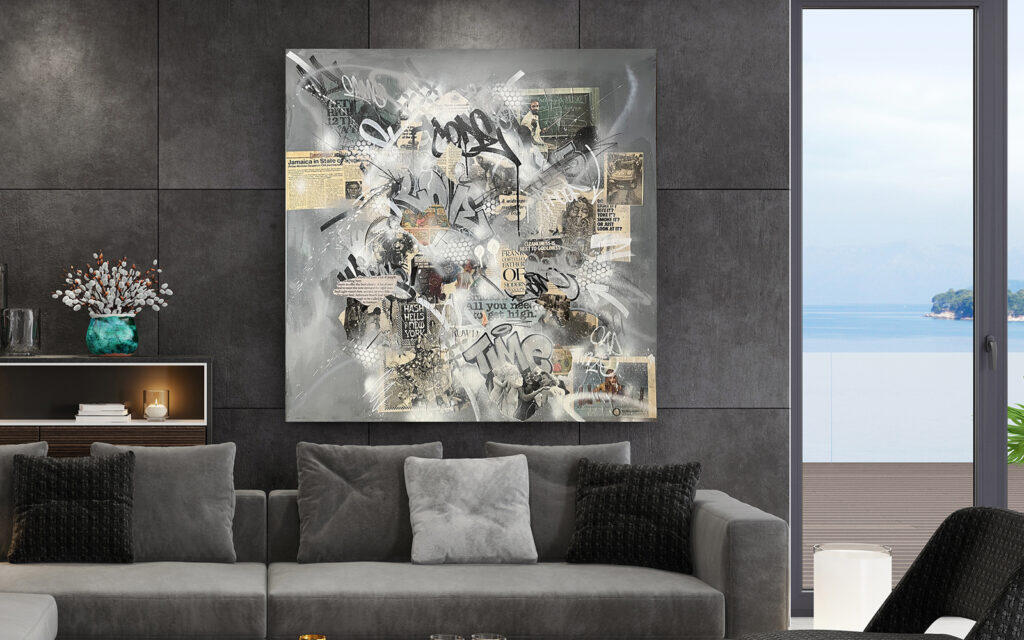
In my artwork, covering an image does not necessarily destroy its presence.
A fragment can remain visible at the edge of a painted area. A small section of a photograph can survive beneath a layer of spray paint. The viewer might recognize only part of the original image, leaving the rest to the imagination.
That partial visibility creates tension.
The viewer is aware that something exists beneath the surface, but cannot access the entire story.
I find that more compelling than explaining everything.
Art can offer enough information to establish a connection while leaving space for the viewer to bring their own experiences into the work. One person might see nostalgia. Another might recognize a cultural reference. Someone else might respond to the color, movement, or contrast without knowing anything about the source material.
The work becomes a meeting point between the experiences I bring to it and the experiences the viewer brings to it.
That is where personal history can become something universal.
Art as a Visual Archive of Lived Experience
I think of my paintings as visual archives, but not archives in the traditional sense.
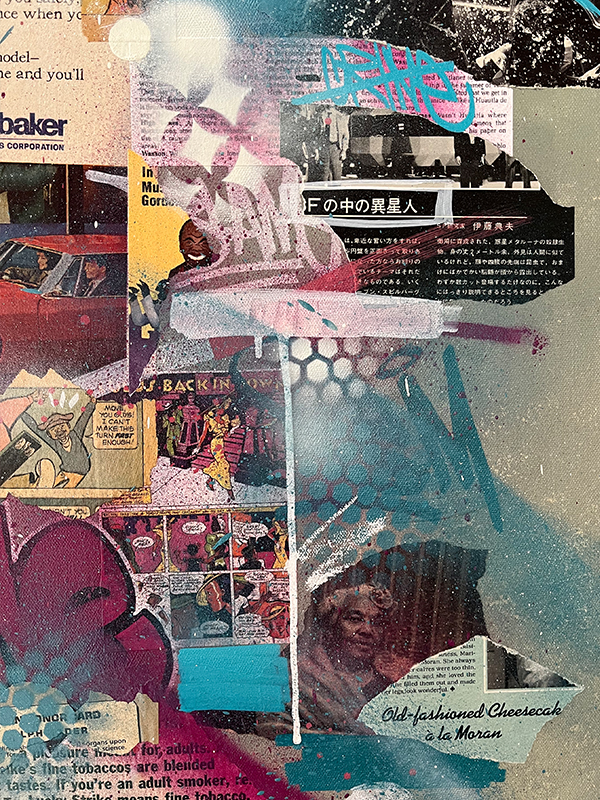
They do not attempt to document events in chronological order or preserve a complete record of a particular period. Instead, they hold fragments of images, gestures, colors, and associations that have been brought together through the act of making art.
Some fragments are immediately recognizable. Others become difficult to identify once they have been transformed by paint and collage.
The work preserves traces rather than complete stories.
This is especially important to my interest in the relationship between nostalgia and contemporary life. Vintage imagery can evoke a particular era, but its presence in a new composition changes how we encounter it. It becomes part of a present-day conversation rather than remaining an artifact of the past.
The same is true of personal memory.
We carry earlier versions of ourselves into the present, but we are not identical to the people we once were. Our histories remain with us, even as our understanding of them changes.
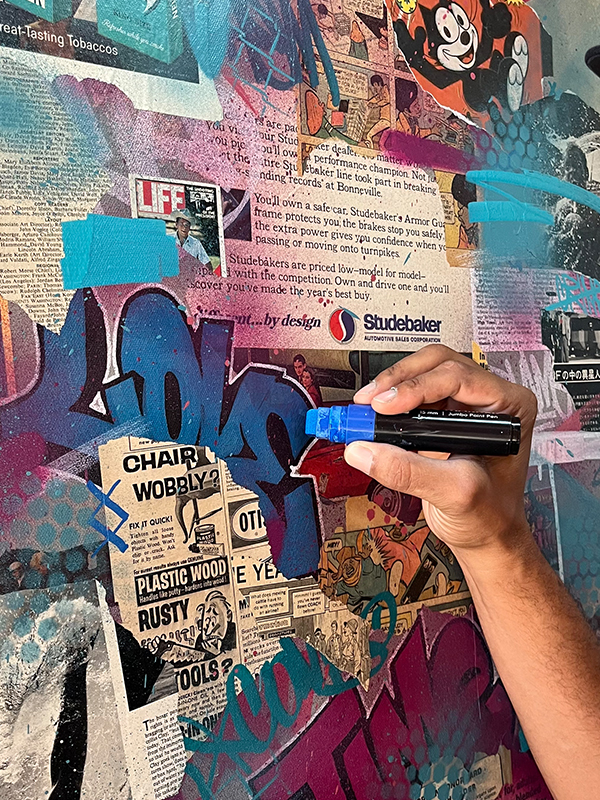
My work brings those ideas together through material.
Paper, paint, and marks occupy the same physical surface, but they do not all tell the same story. Some elements compete. Some reinforce one another. Others remain unresolved.
That unresolved quality matters to me. I do not want every painting to provide a single, fixed interpretation. I want the viewer to have room to discover relationships and make connections of their own.
The artwork can hold a personal history without requiring the viewer to share it.
The Past Is Always Being Rewritten
The longer I think about memory, the less I see it as something that belongs exclusively to the past.
Memory is active. It influences what we notice, how we respond to new experiences, and what we choose to carry forward. It shapes our identities, but it is also reshaped by them.
We are constantly interpreting our lives from wherever we happen to be standing.
That is what draws me back to the studio.
I can take an image that already has a history, introduce it into a new environment, and change its meaning through the materials and marks around it. I can preserve part of it, conceal another part, or allow a new element to redirect the entire composition.
The process mirrors the way I understand life: nothing exists entirely on its own, and nothing remains completely untouched by what comes afterward.
A painting can change as I work on it. My understanding of an experience can change as I grow older. An image can carry one meaning when it first appears and another when I encounter it years later.
We do not simply accumulate memories. We continually reorganize them.
Perhaps that is why the act of making art remains so important to me. It gives me a physical way to explore experiences that do not always make sense when they remain in my head.
I can work through them without needing to resolve every question.
I can leave some things visible, cover others, and allow certain fragments to remain ambiguous.
The final painting is not a complete record of my life. It is a record of how I have chosen to interpret parts of it at a particular moment.
Tomorrow, I might see something differently.
And that is part of the point.
My work is ultimately about what remains, what disappears, and what becomes something new. Through mixed media collage and graffiti, I explore how memory, time, and lived experience continue to shape the way we see ourselves and the world around us.
Every layer carries a trace of what came before. Every new mark changes what is possible next.
We are all works in progress, built from fragments of the past and experiences we have not yet learned how to understand.
Sometimes, the most interesting part of the story is what lies beneath the surface.